
Waterproofing Inspection Perth
Waterproofing Inspection & Compliance Assessment
Independent waterproofing inspections for bathroom renovations, remedial works and completed installations across Perth.
Home » Building Inspection » Waterproofing Inspection& Compliance Assessment
Is Your Waterproofing Compliant with Australian Standards?
The recently published WA Industry Bulletin 177 highlights the importance of proper waterproofing installation and documentation in showers and bathrooms.
Waterproofing that does not meet applicable Australian Standards, the National Construction Code (NCC) and relevant building requirements may increase the risk of water ingress, leaks, mould growth and costly rectification work.
Even in newly constructed or renovated buildings, non-compliant waterproofing installations may affect eligibility for manufacturer’s warranties, depending on the product and warranty conditions.
Furthermore, where building surveyors, certifiers or independent building inspectors request additional documentation or evidence of compliance, non-compliant or inadequately documented waterproofing work may lead to further investigation, rectification requirements or difficulties demonstrating compliance.
Ensuring waterproofing work meets the applicable NCC requirements, Australian Standards and manufacturer’s installation specifications is an important part of achieving a compliant and durable building outcome.
What Does Our Waterproofing Inspection Include?
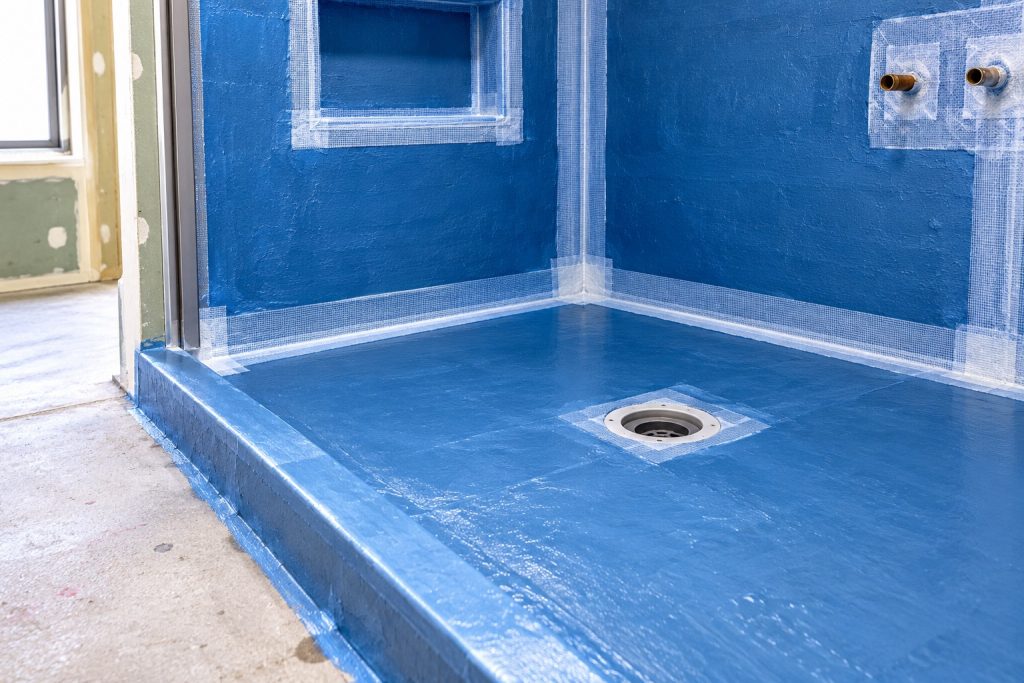
Domestic Wet Area Waterproofing
AS 3740:2021 — Waterproofing of Domestic Wet Areas
Independent waterproofing assessments for bathrooms, showers, laundries and other applicable domestic wet areas.
Our inspection may include:
Waterproofing membrane application, coverage and visible continuity
Waterstops, vertical terminations and critical junctions
Shower bases, hobs and wall-to-floor connections
Floor falls, drainage performance and floor waste connections
Leak Control Flanges (LCFs), including visible installation and membrane connections
Floor waste risers, sleeves and collars, including potential gaps or discontinuities in the waterproofing system
Waterproofing continuity between floor wastes, drainage components and surrounding membranes
Waterproofing around plumbing penetrations, fixtures and fittings
Movement joints, construction joints and changes in substrate
Waterproofing details around baths, shower screens and bathroom entries
Assessment against applicable AS 3740:2021 and NCC requirements
Inspection scope and findings depend on the construction stage, accessibility and available visual or documentary evidence. Concealed waterproofing details may require further investigation or supporting documentation to verify compliance.
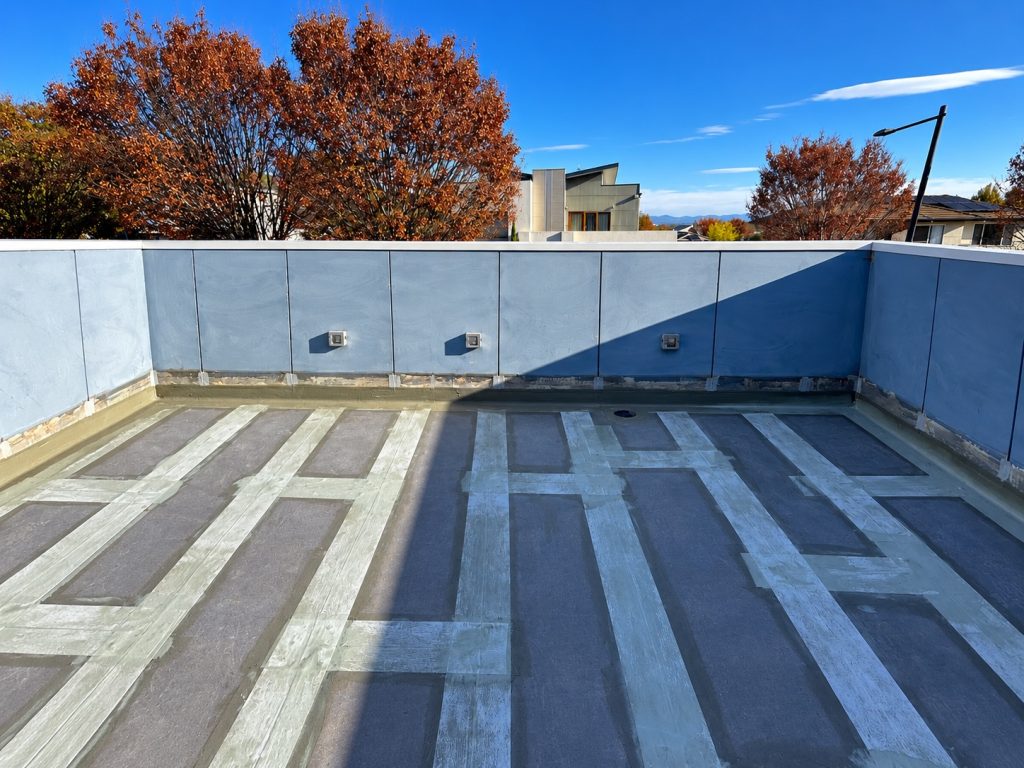
External Above-Ground Waterproofing
AS 4654.2012- Waterproofing Membranes for External Above-Ground Use
Independent waterproofing assessments for balconies, terraces, rooftops and other applicable external above-ground areas.
Our inspection may include:
Waterproofing membrane installation, coverage and visible continuity
Membrane upturns, vertical terminations and perimeter junctions
Balcony floor falls, surface drainage and potential water ponding
Floor wastes, drainage outlets, flanges and waterproofing connections
Waterproofing around balustrade posts, fixings and penetrations
Sliding door thresholds, waterstops and waterproofing terminations
Movement joints, expansion joints and changes in substrate
Wall-to-floor junctions, parapets and structural connections
Visible membrane damage, deterioration and potential discontinuities
Assessment against applicable AS 4654.2:2012 and NCC requirements
Inspection scope and findings depend on the construction stage, accessibility and available visual or documentary evidence. Concealed waterproofing details may require further investigation or supporting documentation to verify compliance.
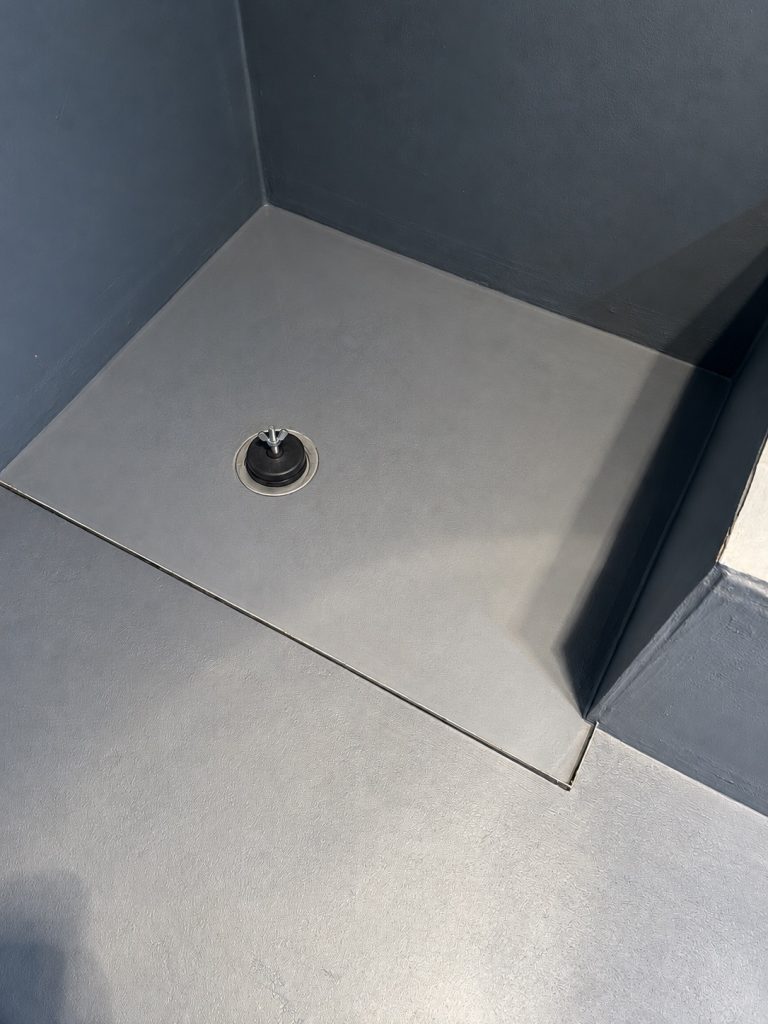
Additional Continuity Testing – Flood Test
Membrane continuity testing may be undertaken in accordance with AS 3740:2021 Appendix C (Normative).
Our testing may include:
Checking that the membrane and flashings are intact before testing
Sealing drainage outlets using suitable test plugs
Allowing the test water to stand for a minimum of 24 hours
Testing shower areas and areas outside the shower independently, where applicable
Monitoring for water loss and signs of leakage
Using thermal imaging to assist in identifying potential moisture intrusion into concealed spaces
Recording test observations and photographic evidence
Recommending appropriate repairs and further testing where necessary
Testing is subject to site suitability, an agreed scope and additional fees. A successful flood test alone does not establish full waterproofing compliance.
Waterproofing – What You Need to Know
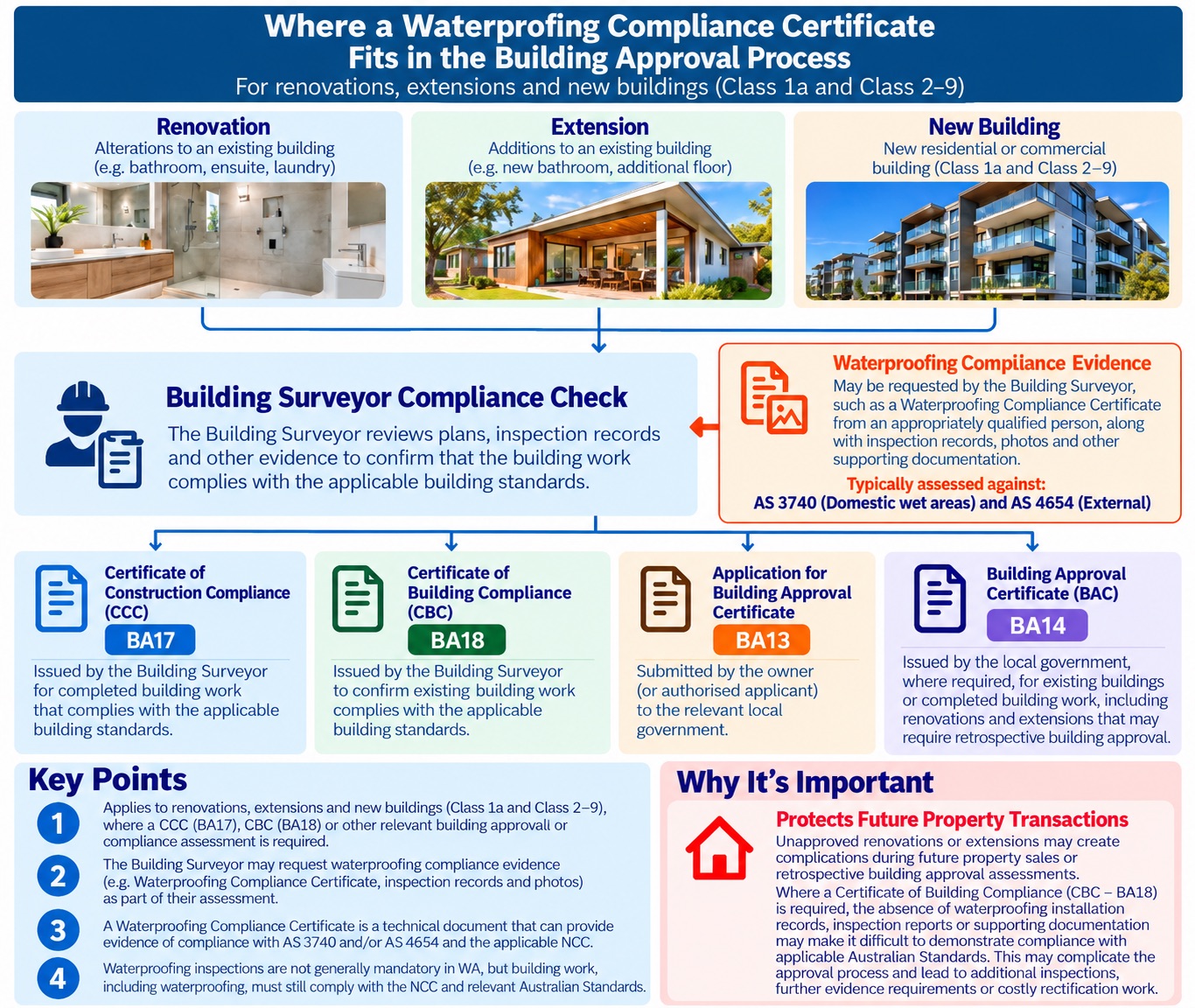
1. What is a Waterproofing Compliance Certificate?
A Waterproofing Compliance Certificate is a document commonly used to confirm that waterproofing work has been assessed against applicable Australian Standards and National Construction Code (NCC) requirements.
For domestic wet areas, such as bathrooms and laundries, AS 3740:2021 generally applies. For external above-ground areas, such as balconies and roof terraces, AS 4654.1 and AS 4654.2 are relevant.
A certificate or compliance document should be supported by appropriate inspection records, construction details and evidence of the waterproofing installation.
WaterSafe provides independent waterproofing inspections and compliance assessment reports based on accessible conditions and available supporting documentation. For concealed or inaccessible waterproofing areas, additional supporting evidence, such as installation photographs, construction records or relevant contractor documentation, may be requested to assist in verifying compliance. Where sufficient evidence is unavailable, compliance may not be able to be confirmed.
2. Why Is a Waterproofing Compliance Certificate Important?
Waterproofing is a critical part of building construction, as defective or incorrectly installed waterproofing systems can lead to water ingress, deterioration of building materials and costly repairs.
A Waterproofing Compliance Certificate provides an important record of the waterproofing work and its assessment against applicable Australian Standards and National Construction Code (NCC) requirements.
A Waterproofing Compliance Certificate may be the only formal record available to demonstrate that waterproofing work was assessed during construction, particularly once the waterproofing membrane has been concealed beneath tiles or other finishes.
This documentation can be particularly valuable when additional evidence or verification is requested by building surveyors, certifiers, property owners, insurers or other relevant third parties.
Appropriate supporting evidence, including installation photographs, inspection records and contractor documentation, can assist in verifying the waterproofing work and addressing future compliance concerns, warranty claims or disputes.
However, a certificate alone does not guarantee that all waterproofing work is compliant or free from concealed defects. Its reliability depends on the scope of assessment and the supporting evidence available.
3. When Should I Arrange a Waterproofing Inspection?
The ideal time to arrange a waterproofing inspection is after the waterproofing membrane has been installed and adequately cured, but before it is covered by screed, tiles or other finishes.
At this stage, important waterproofing details, including membrane coverage, waterstops, junctions, penetrations, drainage connections and terminations, can be visually assessed against applicable Australian Standards, including AS 3740:2021 and AS 4654.1/2:2012, where relevant.
Inspection Stages for Waterproofing Systems
Where waterproofing membranes are installed beneath a screed, an inspection is recommended before the screed is applied.
Where an additional waterproofing membrane is installed over the screed, a further inspection is recommended after the membrane has adequately cured and before tiling commences.
Each waterproofing layer should be assessed at the appropriate construction stage, as subsequent screeding or tiling may conceal important waterproofing details and limit the ability to verify compliance.
The number and timing of inspections depend on the specified waterproofing system, construction sequence and manufacturer’s installation requirements.
Wet Film Thickness (WFT) Measurement and Records
For liquid-applied waterproofing membranes, installers should measure and retain Wet Film Thickness (WFT) records during membrane application, in accordance with the manufacturer’s specifications and applicable requirements.
WFT measurements allow membrane application thickness to be checked at multiple locations while the coating is still wet, helping identify areas of insufficient application before curing.
WaterSafe may request WFT measurement records, application photographs, product Technical Data Sheets (TDS), coating application records and other relevant documentation to assist in assessing membrane thickness and compliance.
WFT records are particularly valuable where direct measurement of the final Dry Film Thickness (DFT) is not practicable. However, WFT measurements alone do not conclusively establish the final cured membrane thickness.
Other Circumstances for Inspection
An independent waterproofing inspection may also be beneficial:
During bathroom renovations or new construction, before waterproofing work is concealed.
When there are concerns about waterproofing workmanship or compliance.
Before accepting completed renovation or rectification work.
When water leakage, moisture damage or suspected waterproofing defects are identified.
When an independent assessment or supporting documentation is requested by a property owner, builder or other relevant party.
Inspections After Tiling
Waterproofing inspections can also be undertaken after tiling has been completed. However, concealed waterproofing components may not be fully verified through visual inspection alone.
Additional installation photographs, WFT records, contractor documentation, targeted testing or further investigation may be required to assist in verifying compliance.
Additional Inspection Fees
Where additional waterproofing inspections are required at different construction stages, such as before and after screeding, a minimum call-out fee of $150 + GST applies for each additional visit to the same wet area.
Additional fees may apply where further investigation or a separate comprehensive inspection report is required.
Arranging an inspection at the appropriate construction stage can help identify potential defects early, preserve important construction evidence and reduce the risk of costly rectification work.
4. Can Waterproofing Be Inspected After Tiling Is Completed?
Yes. A waterproofing inspection can still be carried out after tiling has been completed to assess the condition and performance of visible and accessible components during normal use.
The inspection includes waterstops, minimum floor falls, drainage performance, floor wastes, sealing around penetrations, silicone adhesion and condition, and other critical junctions that may affect waterproofing performance.
These assessments can help identify potential defects, non-compliant workmanship, and areas that may require further attention in both internal wet areas and external above-ground waterproofing systems.
Where the waterproofing membrane is concealed beneath the tiles, supporting documentation or further investigation may be required to verify compliance with AS 3740:2021 and AS 4654.2:2012, as applicable.
5. What Happens If My Waterproofing Does Not Meet Australian Standards?
Non-compliant waterproofing work may lead to several potential issues, including an increased risk of water ingress, moisture damage, and costly repairs in the future.
It may also create difficulties in verifying the condition, installation methods, and compliance of previous waterproofing work, particularly where supporting documentation or inspection records are unavailable.
Additionally, non-compliant installation methods may affect manufacturers’ warranties if the waterproofing system has not been installed in accordance with the manufacturer’s instructions and specifications.
Australian Standards, including AS 3740:2021 and AS 4654.2:2012, establish minimum requirements for waterproofing work to reduce the risk of water ingress and associated building damage.
Identifying non-compliant work early can help property owners understand potential risks, address defects, and maintain appropriate records of their waterproofing systems.
Book Your Waterproofing Inspection in Perth
Whether you’re planning waterproofing work, checking completed installations, or concerned about potential non-compliance, WaterSafe Building Inspection provides independent waterproofing assessments across Perth, Rockingham and Mandurah.
Related Services:
→ Leak & Water Ingress Investigation
→ Pre-Purchase Building Inspection
Talk to Our Expert